
News
Stay up to date on the latest crypto trends with our expert, in-depth coverage.

1FOMC Preview: Warsh's First Show — Can Risk On Continue?【Buy US Spot Stocks, Get NVIDIA Free】2Hormuz Strait Reopens: Will the Federal Reserve Pivot Dovishly and Will the Market Reprice Rate Cuts?3US Stock Market Financing Hits Historical Limit! Morgan Stanley Warns: A Deleveraging Storm is Brewing

Invesco Galaxy, Bitwise, WisdomTree, Fidelity join BTC ETF revision rush
Cointime·2023/12/31 08:30

Meme Coins Go Wild: What Will Happen to Dogecoin, Shiba Inu, and BONK?
BeInCrypto·2023/12/31 01:45

How Vitalik Buterin’s Roadmap Update May Push Ethereum to New All-Time High
BeInCrypto·2023/12/31 00:11

Bitcoin Achieves Record-Breaking Cumulative Transaction Fees, Surpassing $100 Million: Report
Bitcoin blockchain remains undisputed in its transaction fee supremacy.
Cryptopotato·2023/12/30 22:31

Renowned Analysts Explain Why BTC Price Will Hit $1 Million After Bitcoin ETF Approval
BeInCrypto·2023/12/30 22:00

SEC Could Approve Spot Bitcoin ETFs as Early as Next Week
DailyCoin·2023/12/30 21:25

4 Altcoins with Bright Futures: 2024's Must-Watch Cryptocurrencies
Cryptodaily·2023/12/30 18:28
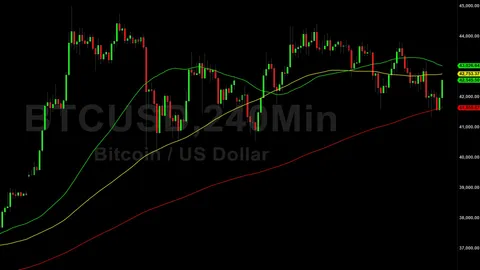
Bitcoin (BTC) Price Analysis: September’s Resistance Becoming 2024's Support? – 31 December 2023
Cryptodaily·2023/12/30 18:10

4 Cryptos on Their Way to the Moon According to Expert Forecasts
Cryptodaily·2023/12/30 16:46
3 Bullish Bitcoin Things to Be Excited About in 2024
The crypto community widely anticipates these Bitcoin-related events, which could unlock a new phase for the ecosystem.
Cryptopotato·2023/12/30 14:07
Flash
19:39
Non-U.S. currencies generally riseIn the commodity currency pairs, the Australian dollar against the US dollar was largely unchanged, showing a V-shaped trend on the day the Reserve Bank of Australia announced no change; the New Zealand dollar rose 0.26% against the US dollar; the US dollar against the Canadian dollar was largely unchanged, with an overall M-shaped trend. The Swedish krona rose 0.44% against the US dollar, the Norwegian krone rose 0.65% against the US dollar, and the Danish krone rose 0.18% against the US dollar. The Polish zloty rose 0.44% against the US dollar, while the US dollar fell 0.54% against the Hungarian forint. The Indian rupee closed down 0.16% against the US dollar, the Turkish lira was largely unchanged against the US dollar, the South African rand rose 0.11% against the US dollar, the Mexican peso rose 0.04% against the US dollar, and the Brazilian real fell 0.53% against the US dollar.
19:23
Industry: "Capacity on US-China routes is fully booked"Golden Ten Data reported on June 17 that Jiang Lei, General Manager of Zhejiang Xinqiaoyuan International Logistics Co., Ltd., stated that since May, the China-US shipping routes have been fully booked, with tight space across all lines in East and South China, frequent container rollovers, and June slots have basically been booked out, marking an overall return to the peak season’s tight market conditions. At the end of April, the freight rate for a 40-foot container from Ningbo to ports on the US West Coast was about $2,900, and about $3,900 to ports on the US East Coast. After several rounds of price increases, the freight rate for the US West Coast route is now close to $6,300, and the US East Coast route is close to $7,500. Industry insiders explained that on the demand side, US inventories are low, creating a need for restocking. On the supply side, more than 300,000 TEU of shipping capacity is stuck in the Persian Gulf due to the Middle East situation; meanwhile, the delayed reopening of the Red Sea means cargo ships still need to take detours, lowering turnover rates and effectively reducing supply, while slower vessel speeds also affect overall shipping capacity, further intensifying the supply-demand imbalance.
19:07
The number of ETFs holding SpaceX stocks increases to 120Bloomberg ETF analyst Eric Balchunas pointed out that the number of ETFs holding SpaceX stock increased from 4 to 120 within a few days. (Cointelegraph)
News