
News
Stay up to date on the latest crypto trends with our expert, in-depth coverage.

1Bitget UEX Daily | Warsh's Dovish Debut Turns Hawkish, Half of Officials Expect Rate Hikes; US-Iran Signs Memorandum Easing Geopolitical Risks; Major US Indices Pull Back, Tech Stocks Under Pressure2Walsh's "debut": Deliberate ambiguity?3🔥 Bitget US Stock Hotspot Sniper|2026.06.18

Is SHIB Preparing for a Massive Move? Three Things to Watch This Week (Shiba Inu Price Analysis)
Cryptopotato·2024/02/06 12:07

Solana confirms outage on mainnet, engineers are investigating
Quick Take: Solana has confirmed an outage on its mainnet, with engineers across the ecosystem currently investigating. This is the first major outage for a year and follows a series of such incidents during 2022.
The Block·2024/02/06 10:51

Wemade shares fall after it reports widening Q4 losses
Wemade’s net loss expanded to 189.5 billion won ($142.6 million) in the fourth quarter of last year from 74.4 billion won in the same period of 2022, its earnings report showed.
The Block·2024/02/06 10:40
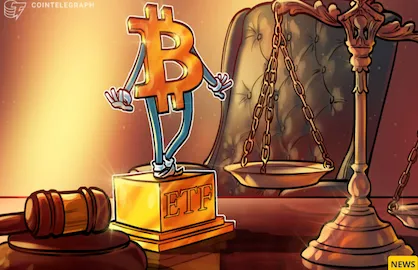
Grayscale CEO urges regulators to approve listed options for spot Bitcoin ETFs
Cointelegraph·2024/02/06 08:38
Ethereum Restaking Narrative Grows as EigenLayer TVL Surges
Ethereum restaking is emerging to be one of the dominant crypto narratives this year and leading protocols such as EigenLayer are seeing a surge in activity.
Cryptopotato·2024/02/06 08:34

Volume 168: Digital Asset Fund Flows Weekly Report
Cointime·2024/02/06 07:40

2 Expert Bitcoin (BTC) Price Predictions: One Bull and One Bear(ish)
Here are a couple of interesting Bitcoin price predictions for the short- and long-term.
Cryptopotato·2024/02/06 06:46
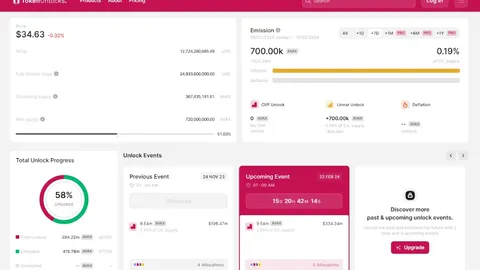
Bitget Futures Market Updates: $900M in Vested Tokens Set to Be Released in February
Bitget·2024/02/06 06:33

‘Substitution’ of gold for Bitcoin is now underway, says Cathie Wood
Cointelegraph·2024/02/06 06:19
Bitcoin drives crypto ETP market flows as Grayscale sell-off slows
Cointelegraph·2024/02/06 06:07
Flash
14:46
Oaktree Capital Founder: Cautionary Investors May Miss Historic Investment Opportunities On June 18, Howard Marks, co-founder of Oaktree Capital, discussed whether the current market is experiencing 'irrational exuberance' and the opportunities and risks under the AI investment boom in a recent podcast. He noted that the current market can be described using Alan Greenspan's words from 30 years ago; we are in a 'boom,' but no one can definitively say whether it is 'irrational.' Using SpaceX's impending IPO with a valuation of nearly $2 trillion as an example, he stated that deciding whether to participate and at what price is purely a matter of 'guessing,' and cannot be calculated like traditional value investing. Howard mentioned his favorite saying: 'Cautious individuals struggle to achieve great things.' He pointed out a current investment dilemma: investing in tech giants may lead to significant mistakes, but it can also yield remarkable successes. Those who hesitate out of fear of risk may miss out on the greatest investment opportunity in human history. In contrast, investors in traditional industries such as transportation, retail distribution, and real estate are unlikely to make catastrophic investment errors, but they also cannot seize the monumental benefits of this transformative era. In terms of valuation, Howard provided a key reference: the current price-to-earnings ratio of the S&P 500 is about 23 times, which is approximately 50% higher than the 80-year average of 16 times, but far lower than the 32 times during the 2000 internet bubble and below the 60 to 90 times level of the 'Nifty Fifty' era, indicating that overall it is 'high but not out of control.' Regarding AI investments, he proposed a three-tiered investment strategy: investing in large-scale tech companies is a low-risk approach due to their established business and cash flow; investing in vertical AI companies like Anthropic and OpenAI carries higher risks but also a higher probability of survival; while investing in early-stage startups is akin to gambling, where most will lose everything, but a few will become extremely wealthy. He advised investors to choose where they want to invest on the risk spectrum, mix different positions along the spectrum, and then determine what proportion these companies should represent in their overall investment portfolio.
14:38
The first Chinese-American executive director of the Ethereum Foundation stepped down after just one year, with Vitalik praising her contributions.BlockBeats News, June 18th, Hsiao-Wei Wang, the first Chinese-American Executive Director of the Ethereum Foundation, announced her resignation today. In her statement, she mentioned that she decided to prioritize her personal life and future directions. She said, "Now is the right time to step back and I am still contemplating the next steps."
In response, Vitalik Buterin praised Hsiao-Wei Wang's contributions, stating that she has been "a steadfast contributor to the Ethereum ecosystem for the past decade" and expressing his anticipation for her future adventures.
On March 10, 2025, the Ethereum Foundation (EF) announced the promotion of Hsiao-Wei Wang (Chinese name: Wang Xiaowei) to the board of directors, making her the first Chinese leader to rise from a technical background to the board in the seven years since the establishment of the EF.
14:37
Oaktree Capital founder: Overly cautious people rarely achieve great things, and those who are still observing may miss the greatest investment opportunity in historyGlonghui, June 18 — Howard Marks, co-founder of Oaktree Capital, recently discussed in a podcast whether the current market is experiencing an “irrational exuberance” and the opportunities and risks surrounding the AI investment boom. He pointed out that Alan Greenspan’s comments from 30 years ago could describe today’s market—we are indeed in a “boom,” though no one can definitively determine whether it is “irrational.” He used the example of SpaceX potentially going public with an estimated valuation close to 2 trillion USD, stating that deciding whether and at what price to participate in such IPOs is pure “guesswork”—unlike traditional value investing, you cannot simply put numbers on paper to figure out a reasonable price. Howard also mentioned one of his favorite sayings: the overly cautious rarely accomplish great things. He identified a contemporary investment dilemma: investing in these tech giants may result in huge mistakes, but could also deliver remarkable successes. Meanwhile, those sitting on the sidelines out of fear of risk might miss one of the greatest investment opportunities in human history. In contrast, investors in traditional industries like transport, distribution retail, and real estate are unlikely to make catastrophic mistakes, but also won’t catch this era-defining windfall. In terms of valuations, Howard provided a key reference: the current S&P 500 PE ratio is around 23 times—about 50% higher than the 80-year average of 16 times, but still much lower than 32 times during the 2000 internet bubble, and also below the “Nifty Fifty” era highs of 60 to 90 times. Thus, overall it is “somewhat high, but not yet out of control.” For AI investing, he proposed a three-tier allocation approach: investing in the super-large tech companies is the low-risk route due to their established businesses and cash flow; investing in vertical AI companies like Anthropic and OpenAI entails higher risk but also a higher survival probability; and investing in early-stage startups is akin to buying a lottery ticket—most will lose everything, but a few will become extremely wealthy. He suggests that investors choose at which point in the risk spectrum they invest, or diversify positions across the spectrum, and then decide what proportion these companies should comprise in their total investment portfolio.
News