
News
Stay up to date on the latest crypto trends with our expert, in-depth coverage.

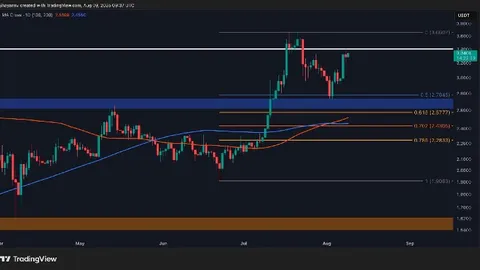
Ripple Price Analysis: Will XRP Break Above $4 This Week?XRP Price Analysis: Technicals
CryptoNewsNet·2025/08/10 11:05
Michael Saylor is not sweating the rise of Ethereum treasury companies
CryptoNewsNet·2025/08/10 11:05
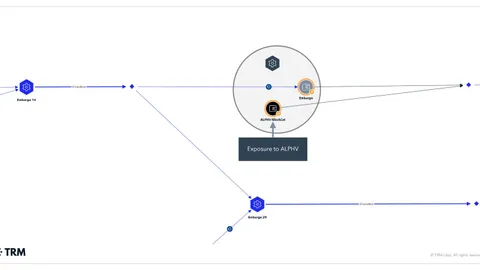
Embargo ransomware group moved $34M in crypto since April: TRM Labs
CryptoNewsNet·2025/08/10 11:05
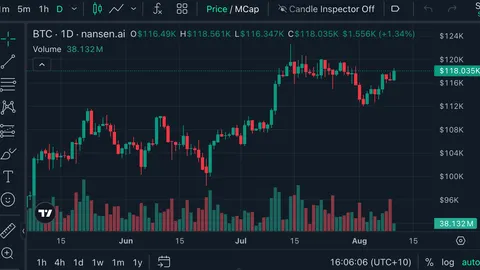
Bitcoin Price: Remarkable Surge Above $118,000!
BitcoinWorld·2025/08/10 11:00

Best presale crypto to buy now: why Bitcoin Penguins is grabbing eyeballs
Coinjournal·2025/08/10 11:00

Bo Hines Moves From Public Office To Private Sector
Cointribune·2025/08/10 10:55

Ethereum Tops $4K As Hayes Reloads
Cointribune·2025/08/10 10:55

Hyperliquid (HYPE) Soars Higher While Tracing Key Fractal Pattern – What Could Come Next?
CoinsProbe·2025/08/10 10:55
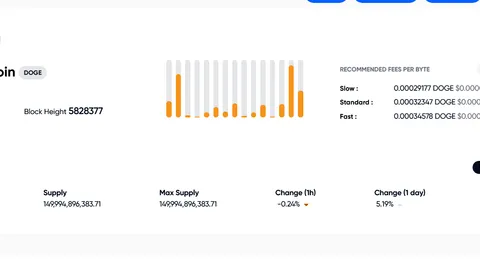
Dogecoin News: Is DOGE About to Pump Hard?
Cryptoticker·2025/08/10 10:45

Michael Saylor Dismisses Ethereum Treasury Concerns While Maintaining Bitcoin Focus
BTCPEERS·2025/08/10 10:00
Flash
13:40
Goldman Sachs Interprets the "Post-Modern" Investment Cycle: AI and Geopolitics Driving Capital Expenditure SupercycleBlockBeats News, June 17th – Goldman Sachs believes that the world is transitioning from the “modern” supercycle characterized by low inflation, low interest rates, and globalization, to a “post-modern” era with higher macroeconomic volatility, higher real interest rates, increased government intervention, and more pronounced regionalization. In this environment, the era of relying on valuation expansion to drive returns is ending, and earnings growth per share will become the core variable driving market performance. Goldman Sachs strategists Peter Oppenheimer, Sharon Bell, and others stated in a report titled “The Post-Modern Era: Embracing the Capex Boom” that higher capital costs are constraining the multiple expansion space, there is an increasing cross-sectional dispersion of market returns, strategies relying solely on beta exposure will face greater challenges, and the alpha value of active stock selection will significantly increase.
The report suggests that the AI revolution-driven surge in private capital expenditure, coupled with geopolitically driven government public investment increases, is forming a capital expenditure supercycle. According to Goldman Sachs data, capital expenditures for S&P 500 constituents grew by 38% year-on-year in the first quarter of 2026, while the pace of buybacks was only 1%, marking a reversal of the logic where post-financial crisis companies relied more on buybacks than capex. In terms of AI spending, market consensus expectations compiled by Goldman Sachs show that the combined capital expenditure of Amazon, Meta, Google, Microsoft, and Oracle is estimated to reach around $75.5 billion in 2026, an increase of about 80% from a year ago and approximately 84% growth compared to actual spending in 2025, projected to further rise to around $92 billion in 2027. Goldman Sachs points out that capex momentum is shifting from data centers to the energy, industrial, and infrastructure sectors.
Goldman Sachs stated that the growth of tech giants has increasingly relied on physical infrastructure such as data centers and power supply, leading to a “cascade effect” that spills over capital expenditure to traditional value industries such as industry, energy, and utilities. Additionally, geopolitical forces are driving an increase in defense spending, supporting demand for traditional defense equipment such as planes, tanks, ammunition, and ships. Goldman Sachs reiterated its preference for capex beneficiaries and recommended four thematic investment baskets: artificial intelligence, defense spending, power and electrification, and HALO (Heavy Asset-Light Organizations) stocks. Goldman Sachs believes that future index-level returns may tend to flatten, but relative returns across regions, industries, and styles will diverge, signaling that investors are entering a new era where active management and alpha generation are becoming more valuable.
13:38
The Federal Reserve decision will be announced at 2:00 a.m. Beijing time on Thursday.Jinse Finance reported that the Federal Reserve stated the FOMC meeting will resume as scheduled at 9:00 a.m. local time on Wednesday. (Note: The Federal Reserve FOMC meeting lasts for two days, and the decision will be announced at 2:00 a.m. Beijing time on Thursday.)
13:37
Middle East tensions impact the global aviation industryGlonghui June 17|According to CCTV Finance, Iran and the United States have temporarily reached a memorandum of understanding, but the impact caused by their conflict is unlikely to be eliminated in the short term. Dieter Franks, a member of the board of Lufthansa Group, said on the 16th that due to the tense situation in the Middle East and rising aviation fuel prices, Lufthansa plans to further reduce its European route network. Franks stated that losses from short-haul routes are affecting the profitability of long-haul routes, and this situation is unsustainable. Recently, escalating tensions in the Middle East have impacted the global aviation industry. Lufthansa Group previously stated that its fuel costs for 2026 are expected to increase by an additional 1.7 billion euros, which is about 13.3 billion RMB, significantly raising operating costs. In April this year, Lufthansa announced it would cut 20 thousand short-haul flights and consolidate routes by the end of October to cope with the surge in aviation fuel prices and supply shortages triggered by tensions in the Middle East.
News